
Introduction
An Artificial Zoo is a place or educational attraction where artificial representations of animals are used to introduce visitors to wildlife, animal diversity, and natural ecosystems. Instead of depending entirely on living animals, these exhibits use models, sculptures, replicas, and sometimes advanced digital technologies to help people understand the animal kingdom.
The concept has different applications around the world. One documented example is the Artificial Zoo inside the State Botanical Garden at Nandankanan in Odisha, India. It uses models of different animals to explain their ecological niches and generate awareness among children. This educational approach makes wildlife information more accessible, especially for younger visitors.
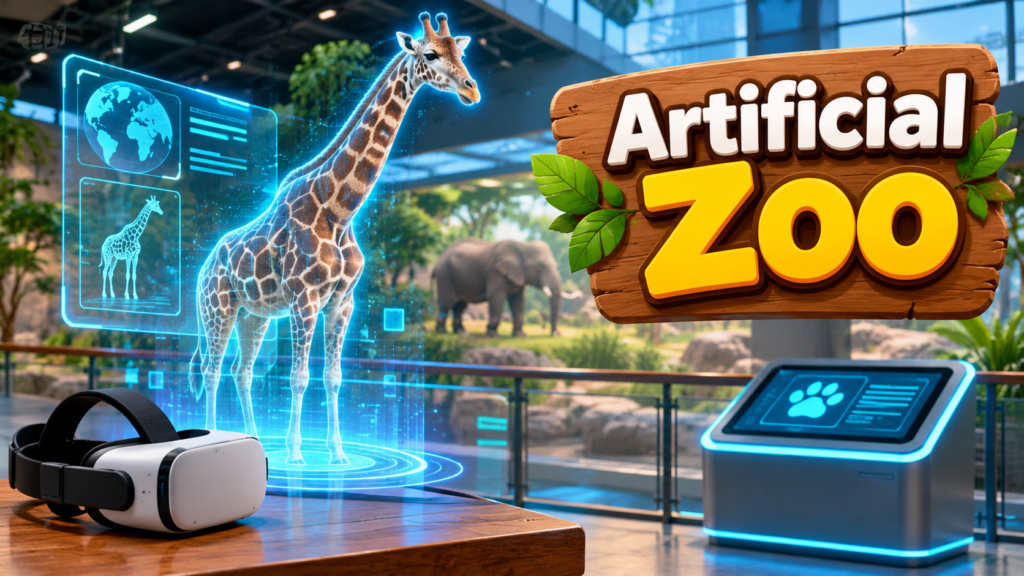
Modern artificial zoo experiences can also include robotic animals, holographic displays, augmented reality, and virtual reality environments. These technologies create opportunities to explore wildlife without necessarily keeping every represented animal in a physical enclosure.
Artificial zoos combine education, creativity, technology, and environmental awareness. They provide an alternative way to introduce people to different species while encouraging interest in biodiversity and wildlife conservation.
Quick Information Table
| Information | Details |
|---|---|
| Name | Artificial Zoo |
| Main Concept | Artificial representation of wildlife |
| Main Purpose | Education and wildlife awareness |
| Known Location-Based Example | State Botanical Garden, Nandankanan |
| Location | Odisha, India |
| Established Garden | 1963 |
| Main Exhibit Materials | Animal models and replicas |
| Target Audience | Children, students, families, and tourists |
| Educational Focus | Animal habitats and ecological niches |
| Modern Technologies | Robotics, VR, AR, and holographic displays |
| Main Benefits | Learning, accessibility, and interactive experiences |
| Related Fields | Tourism, education, technology, and conservation |
What Is an Artificial Zoo?
An Artificial Zoo is an educational or entertainment environment that represents animals through artificial materials or digital technology rather than relying exclusively on living wildlife.
The term does not describe one officially standardized type of zoological institution. Different attractions use different approaches depending on their purpose, available resources, and target visitors.
For example, an educational artificial zoo may contain life-sized animal models representing different species. These models help children recognize animals and understand their natural environments.
A technology-based artificial zoo may use computer-generated animals, holographic projections, robotic figures, or immersive virtual environments.
The main objective is to make wildlife information easier to understand and more engaging for visitors.
Artificial zoos can be particularly useful in educational environments because they allow people to examine animal appearances, habitats, and ecological relationships without requiring every species to be physically present.
Artificial Zoo at Nandankanan
One documented example is located inside the State Botanical Garden at Nandankanan, Odisha, India.
According to the garden’s official description, the Artificial Zoo contains models of different animals. These models are used to explain ecological niches and generate awareness among children.
The attraction forms part of a larger educational and recreational botanical garden that also includes themed gardens, plant collections, children’s facilities, and nature-related exhibits.
This example is important because it demonstrates that the term Artificial Zoo does not necessarily refer to artificial intelligence or futuristic holographic technology. It can also describe a simple educational exhibit featuring animal models.
History and Development of Artificial Zoos
The idea of representing animals through artificial models has existed for many years.
Before modern digital technology became widely available, museums, educational institutions, and botanical gardens used sculptures, mounted specimens, drawings, and realistic models to introduce visitors to different animal species.
These displays helped people learn about animals that were difficult to observe in their natural environments.
Over time, improvements in materials and manufacturing made artificial animal models more realistic. Fiberglass, plastics, mechanical components, and improved painting techniques allowed creators to produce detailed representations.
The development of computers introduced another stage in this process. Digital animations and interactive educational displays made it possible to demonstrate animal movement and behavior without using physical specimens.
Today, artificial wildlife experiences can involve several technologies, including robotics, projection systems, virtual reality, and augmented reality.
Although these developments have expanded the concept, traditional animal models remain useful for basic education and public awareness.
Main Types of Artificial Zoos
Artificial zoos can be divided into several categories according to the methods used to represent wildlife.
1. Model-Based Artificial Zoos
Model-based artificial zoos use physical replicas of animals.
These models may represent mammals, birds, reptiles, marine animals, and other species.
They are commonly displayed in educational gardens, museums, schools, and public exhibitions.
Their main advantages include:
- Simple wildlife education.
- Easy identification of animal species.
- Physical displays that visitors can examine.
- Relatively straightforward maintenance compared with living-animal facilities.
- Opportunities to explain different habitats and ecological roles.
The Artificial Zoo at Nandankanan is an example of this educational approach.
2. Robotic Animal Exhibits
Robotic animal exhibits use mechanical systems to reproduce selected animal movements.
These systems may contain motors, sensors, mechanical joints, and artificial outer coverings.
Depending on their design, robotic animals can move their heads, open their mouths, walk, or produce recorded sounds.
Robotic exhibits are often used in educational attractions and themed entertainment environments.
They can help visitors understand animal shapes and movements, although programmed actions cannot fully reproduce the complexity of living wildlife.
3. Holographic Artificial Zoos
Holographic attractions use advanced display and projection technologies to create life-sized digital animals.
Visitors may encounter virtual elephants, whales, dinosaurs, and other creatures within specially designed environments.
A notable example is Hologram Zoo, developed by Axiom Holographics.
Its attractions combine large-scale holographic displays, computer-generated imagery, tracking, and immersive environments to create interactive wildlife experiences.
The technology does not place a solid animal in physical space. Instead, it produces a visual three-dimensional experience using specialized display systems.
4. Virtual Reality Zoos
Virtual reality zoos use computer-generated environments that visitors explore through VR headsets.
Users can experience simulated forests, oceans, grasslands, and other ecosystems.
Some experiences allow visitors to observe animals from different angles or explore environments that would otherwise be difficult to access.
Virtual reality can make wildlife education more interactive by allowing learners to experience digital environments rather than simply reading about them.
5. Augmented Reality Zoos
Augmented reality combines digital objects with the real-world environment.
Visitors can use compatible smartphones, tablets, or other devices to view virtual animals within their surroundings.
For example, a digital elephant may appear on a screen as though it is standing inside a garden or exhibition area.
This technology can make educational activities more engaging, especially for younger audiences.
Important Features of an Artificial Zoo
Artificial zoos can include different features depending on their design and educational objectives.
Realistic Animal Models
Animal models are among the most recognizable elements of traditional artificial zoos.
They are created to represent the physical appearance of different species, including body shape, skin texture, colors, and other identifying characteristics.
Accurate models can help children recognize animals and understand their physical differences.
Educational Information Displays
Information boards and descriptions can explain important details about each represented animal.
These may include:
- Animal names and classifications.
- Natural habitats.
- Food preferences.
- Physical characteristics.
- Ecological roles.
- Conservation concerns.
Such information helps visitors understand more than just the appearance of an animal.
Interactive Learning
Modern artificial zoo attractions may include interactive screens, sound systems, digital activities, and educational games.
These features encourage visitors to participate rather than simply observe.
Children can learn about different species through quizzes, animations, and simulated animal environments.
Themed Environments
Some artificial zoos organize their exhibits around particular habitats.
Examples include tropical rainforests, deserts, grasslands, polar regions, and underwater environments.
Themed displays help visitors understand how animals are adapted to different environmental conditions.
Accessibility
Artificial animal displays can introduce wildlife information to people who cannot easily travel to distant wildlife parks or natural habitats.
They can also provide controlled educational experiences for schools, families, and community groups.
Educational Importance of Artificial Zoos
Education is one of the most important purposes of artificial zoo exhibits.
Children often learn more effectively when information is presented through visual examples and interactive activities.
Animal models allow them to identify different species and understand their physical features.
Understanding Animal Diversity
Artificial zoos can introduce visitors to animals from different continents and ecosystems.
Students can compare mammals, birds, reptiles, and other animal groups.
This supports basic learning about biodiversity and biological classification.
Learning About Ecological Niches
An ecological niche describes the role of an organism within its environment.
It includes how an animal interacts with other organisms, uses available resources, and responds to environmental conditions.
Artificial animal displays can help explain these relationships through educational descriptions and habitat representations.
For example, a display about a herbivore can explain its feeding habits and relationship with plants, while a predator exhibit can introduce the role of carnivores in maintaining ecosystem balance.
Supporting School Activities
Artificial zoos can complement classroom education.
Teachers can use animal models and visual displays to make lessons about wildlife more interesting.
Students can also develop observation skills by comparing different species and identifying their characteristics.
Encouraging Environmental Awareness
Learning about animals can encourage people to understand the importance of protecting biodiversity.
Educational exhibits can explain threats such as habitat destruction, pollution, climate change, and illegal wildlife trade.
The objective is to develop appreciation for nature and encourage responsible environmental behavior.
Benefits of Artificial Zoos
Artificial zoos offer several educational and practical benefits.
No Dependence on Live Animals in Model-Based Exhibits
An exhibit made entirely from animal models does not require living specimens.
This means visitors can learn about different species without the exhibit itself needing to house or feed those animals.
However, this benefit applies to the artificial display rather than necessarily to the entire venue.
Lower Animal-Care Requirements
Physical animal models do not require veterinary treatment, specialized diets, or daily animal husbandry.
They still require cleaning, maintenance, repairs, and suitable exhibition conditions.
Greater Educational Flexibility
Artificial displays can represent animals that are rare, extinct, dangerous, or difficult to observe in natural habitats.
They can also show species from different parts of the world in one educational environment.
Opportunities for Technology-Based Learning
Digital and robotic attractions can demonstrate animal movement, migration, and selected behaviors through simulations.
These features can help explain processes that are difficult to observe during a normal visit to a traditional zoo.
Family-Friendly Entertainment
Artificial animal attractions can combine education with recreational activities.
Families can explore exhibits together, participate in interactive activities, and develop an interest in wildlife.
Artificial Zoo vs Traditional Zoo
Although both concepts introduce visitors to the animal kingdom, their approaches are different.
| Feature | Artificial Zoo | Traditional Zoo |
|---|---|---|
| Animal Representation | Models, robots, or digital animals | Living animals |
| Main Purpose | Education and simulated experiences | Wildlife education, care, and conservation |
| Animal Feeding | Not required for artificial models | Required for living animals |
| Veterinary Care | Not needed for models | Essential for animal welfare |
| Animal Behavior | Static or simulated | Natural behavior within managed environments |
| Maintenance | Models, displays, and technology | Enclosures, equipment, and animal-care facilities |
| Education | Visual models and digital learning | Direct observation and educational programs |
| Conservation | Mainly awareness unless supported by projects | May include breeding, research, and conservation programs |
Neither approach automatically replaces the other.
Traditional zoos can contribute to wildlife research, conservation breeding, veterinary care, and public education. Artificial zoos can provide additional educational opportunities without requiring every represented species to be kept in captivity.
Artificial Zoo and Wildlife Conservation
Artificial zoos can contribute to wildlife awareness by helping people understand animal diversity and environmental challenges.
However, displaying artificial animals does not directly protect wild populations.
Their conservation value depends on the educational activities, partnerships, and environmental programs associated with the attraction.
Promoting Biodiversity Awareness
Displays can introduce visitors to endangered species and explain why their natural habitats need protection.
Explaining Habitat Loss
Artificial environments can demonstrate how deforestation, pollution, and urban expansion affect wildlife.
Supporting Conservation Education
Schools and educational organizations can use artificial exhibits to introduce responsible environmental behavior.
Encouraging Responsible Tourism
Artificial wildlife experiences can offer an educational activity without requiring visitors to encounter captive animals.
However, visitors should distinguish between an animal-free exhibit and a venue that combines artificial attractions with living animals.
Technology Used in Modern Artificial Zoos
Technology has expanded the possibilities of artificial wildlife attractions.
Artificial Intelligence
Artificial intelligence can be used to support interactive educational systems, recognize visitor interactions, and generate responses from digital animal characters.
It can also help analyze animal behavior in conventional zoos, where AI-powered monitoring systems may identify unusual movements or changes in activity.
3D Modeling and Animation
Three-dimensional modeling allows designers to create digital representations of animals with detailed body structures, textures, and movements.
Animators can use these models to demonstrate activities such as walking, swimming, flying, and feeding.
Sensors and Tracking Systems
Sensors can detect visitor movements and interactions.
Some immersive attractions use tracking systems to adjust visual perspectives and make digital experiences more realistic.
Projection and Display Technology
Large displays and projection systems can create immersive wildlife environments.
These technologies can present animals at life size and combine them with environmental sounds and digital scenery.
Virtual and Augmented Reality
VR and AR can make educational experiences more interactive by allowing visitors to explore simulated ecosystems or view digital animals within real surroundings.
Latest Developments in Artificial Zoo Experiences
Artificial wildlife attractions are continuing to develop as display technology and computer-generated content improve.
One important development is the expansion of holographic zoo attractions.
Axiom Holographics reported in October 2026 that its Hologram Zoo network was approaching 20 operating locations across several countries. The company also announced a new South America-themed experience featuring tropical environments and wildlife.
Other developments include underwater holographic experiences, digital storytelling, and expanded libraries of immersive content.
Artificial intelligence is also finding practical applications in conventional wildlife institutions.
For example, Marwell Zoo in the United Kingdom announced a trial of AI-powered night-vision cameras in June 2026. The system was designed to monitor nighttime activity among giraffes and red river hogs and identify unusual behavioral patterns that might indicate health problems.
This is an important distinction: AI monitoring in a traditional zoo is not the same thing as an artificial zoo. It demonstrates how technology can support animal welfare even when real animals remain part of the attraction.
Challenges and Limitations of Artificial Zoos
Despite their benefits, artificial zoos also have limitations.
Limited Natural Behavior
Static models cannot demonstrate real animal behavior. Robotic and digital simulations can reproduce selected movements but cannot fully represent the complexity of living organisms.
Technology and Maintenance Costs
Advanced attractions require specialized equipment, software, display systems, and regular maintenance.
Technical problems can affect the visitor experience.
Educational Accuracy
Artificial representations must be supported by reliable scientific information.
Incorrect animal models or misleading digital behavior can create misunderstandings about wildlife.
Limited Emotional Connection
Some visitors prefer observing living animals because real wildlife provides experiences that artificial representations cannot fully reproduce.
Conservation Funding
An artificial zoo does not automatically contribute to wildlife conservation.
Its operators need meaningful educational partnerships or conservation initiatives if they want to create a direct positive impact.
The Future of Artificial Zoos
The future of artificial zoos is likely to involve a combination of educational models, robotics, digital simulations, and immersive display systems.
As technology improves, visitors may be able to explore increasingly realistic animal environments and learn about ecosystems through interactive experiences.
Schools may also use virtual wildlife environments to teach subjects such as biodiversity, ecology, and environmental science.
Another promising direction is the combination of artificial wildlife exhibits with conservation education.
For example, an interactive display could explain how climate change affects polar animals or how habitat destruction influences endangered species.
These experiences could help visitors understand environmental problems through engaging visual demonstrations.
Nevertheless, artificial zoos should complement rather than replace genuine wildlife conservation. Protecting natural habitats and supporting responsible animal care remain essential.
Frequently Asked Questions (FAQs)
1. What is an Artificial Zoo?
An Artificial Zoo is an educational or entertainment attraction that represents animals through models, sculptures, robotics, holograms, or digital simulations rather than relying entirely on living animals.
2. Where is the Artificial Zoo in Nandankanan?
The documented Artificial Zoo is located inside the State Botanical Garden at Nandankanan in Odisha, India.
3. What is the purpose of the Artificial Zoo at Nandankanan?
Its animal models are used to explain ecological niches and generate wildlife awareness among children.
4. Does an Artificial Zoo contain real animals?
Not necessarily. A model-based artificial zoo uses replicas rather than living animals. Some larger attractions may combine artificial exhibits with conventional live-animal displays.
5. How are artificial animals created?
They can be made using materials such as fiberglass, plastic, metal, and other modeling materials. Digital versions are created using 3D modeling, animation, and computer-generated imagery.
6. Can Artificial Zoos help children learn?
Yes. They can introduce children to animal species, habitats, ecological roles, and biodiversity through visual and interactive educational displays.
7. What technologies are used in modern Artificial Zoos?
Modern attractions may use robotics, artificial intelligence, holographic displays, virtual reality, augmented reality, 3D animation, and interactive sensors.
8. Are Artificial Zoos better than traditional zoos?
They serve different purposes. Artificial zoos offer simulated and educational experiences, while traditional zoos provide opportunities to observe living animals and may support conservation, research, and animal care.
9. Do Artificial Zoos support wildlife conservation?
They can support conservation awareness and education. Direct conservation contributions depend on whether the attraction participates in genuine conservation programs.
10. What is the future of Artificial Zoos?
Future artificial zoos may combine more advanced holograms, realistic robotic animals, AI-powered educational systems, and immersive digital environments to create interactive wildlife experiences.
Conclusion
Artificial Zoo represents an alternative approach to wildlife education and entertainment. Through animal models, replicas, robotics, holographic displays, and virtual environments, these attractions allow visitors to explore different species and ecosystems without depending entirely on living animals.
The Artificial Zoo at Nandankanan provides a clear educational example, using animal models to explain ecological niches and encourage awareness among children. Modern holographic and virtual attractions demonstrate how technology is expanding this concept into more immersive experiences.
Although artificial zoos cannot fully reproduce the natural behavior and ecological complexity of living wildlife, they offer valuable opportunities for education, accessibility, and environmental awareness.
Their greatest potential lies in combining engaging experiences with accurate scientific information and responsible conservation education. As technology develops, artificial zoos may become increasingly useful spaces for helping future generations understand and appreciate the natural world.
