Introduction
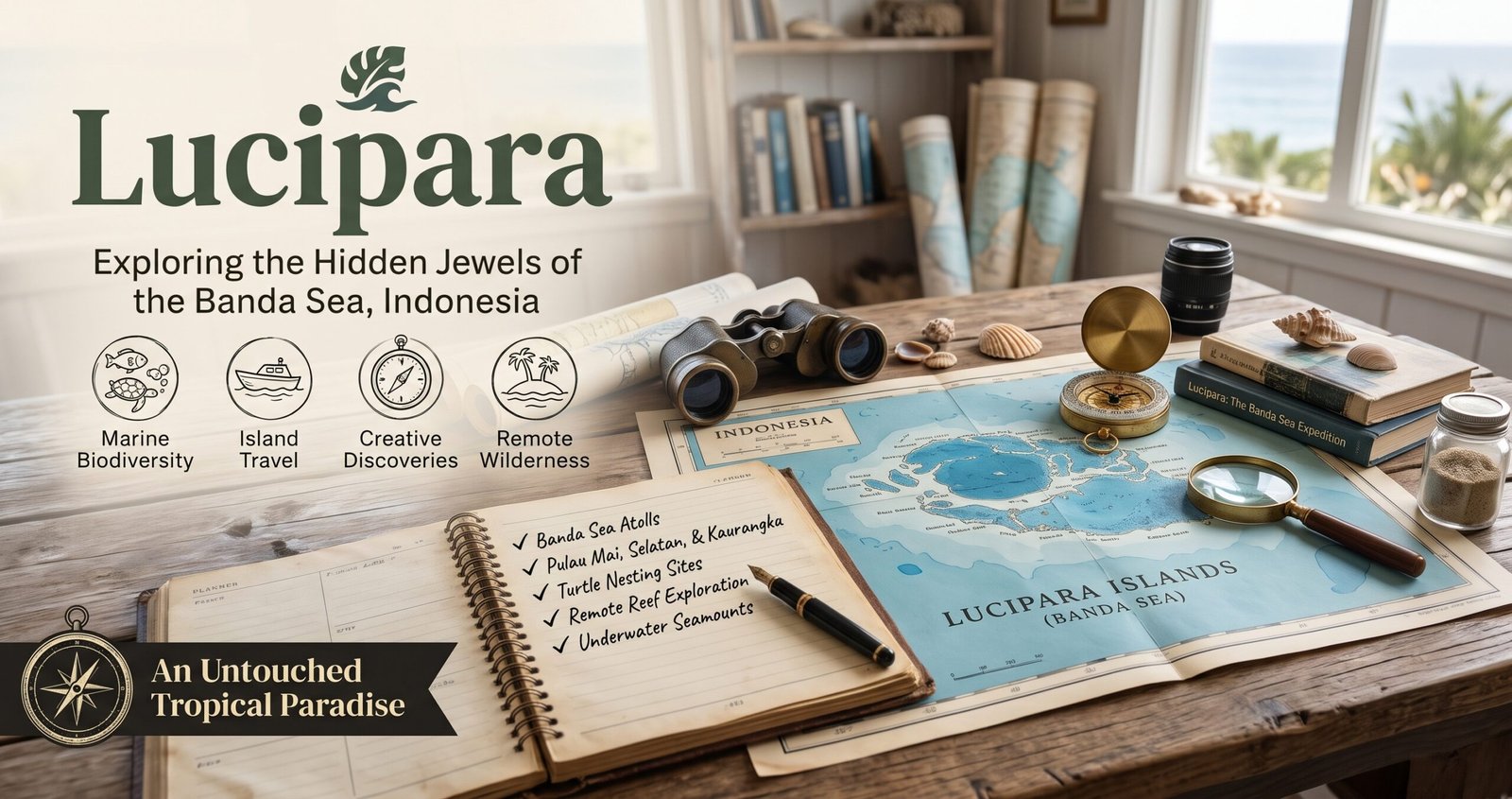
Lucipara is a remote group of coral islands located in the Banda Sea in eastern Indonesia. Also known as the Lucipara Islands or Pulau-pulau Maisel, this beautiful archipelago is part of the Molucca Islands in Maluku Province. It is known for its coral reefs, sea turtle population, tropical marine environment, and isolated geographical location.
Unlike popular Indonesian destinations with hotels, restaurants, and regular tourist facilities, Lucipara remains relatively remote and difficult to access. Its surrounding waters contain diverse marine habitats, making the area interesting for marine researchers, conservation organizations, divers, and nature enthusiasts.
The islands have also attracted historical interest. American diplomat Edmund Roberts visited the area during the nineteenth century and referred to it as Lucepara in his 1832 journal. Over time, the region has become increasingly relevant to marine conservation discussions because of its coral ecosystems, nesting turtles, and seabird populations.
Lucipara is more than a collection of small tropical islands. Its geographical position, geological structure, marine biodiversity, and conservation importance make it an interesting part of Indonesia’s natural environment.
Quick Information Table
| Detail | Information |
|---|---|
| Name | Lucipara Islands |
| Alternative name | Pulau-pulau Maisel |
| Local name | Kepulauan Lucipara |
| Location | Banda Sea, Indonesia |
| Province | Maluku |
| Country | Indonesia |
| Approximate coordinates | 5.4943° S, 127.5423° E |
| Nearby island group | Penyu Islands |
| Nearby geographical feature | Manipa Strait |
| Main islands | Pulau Selatan, Pulau Kaurangka, Pulau Mai |
| Geographical formation | Coral islands and atoll reef system |
| Famous for | Sea turtles, coral reefs, and marine biodiversity |
| Historical reference | Edmund Roberts, 1832 |
| Permanent population | No established permanent population in available descriptions |
| Main environmental importance | Coral reef and wildlife conservation |

What Is Lucipara?
Lucipara is an isolated island group in the Banda Sea, situated within Indonesia’s Molucca Islands. It lies approximately 50 kilometers west of the Penyu Islands and south of the Manipa Strait, near Seram Island.
The archipelago consists of small coral islands surrounded by extensive reef formations. Its remote position separates it from major population centers, creating a natural environment that supports different forms of marine and coastal wildlife.
The islands are also known by the name Pulau-pulau Maisel. Historical references and geographical records sometimes use alternative spellings, including Lucepara.
Lucipara is not a large developed tourist destination. Instead, its importance comes from its geographical characteristics, marine habitats, and ecological value.
Where Is Lucipara Located?
The Lucipara Islands are located in the central Banda Sea, within Maluku Province in eastern Indonesia.
Their approximate geographical coordinates are 5°29′39″ south and 127°32′32″ east.
The islands are positioned between several important geographical features:
- Seram Island lies to the north.
- Manipa Strait is situated north of the island group.
- The Penyu Islands are approximately 50 kilometers to the east.
- The Banda Sea surrounds the archipelago.
The islands are relatively far from major settlements. This isolation influences transportation, fishing activities, tourism, and conservation operations.
The provincial capital, Ambon, is one of the main reference points for reaching the broader Banda Sea region.
Alternative Names and Geographic Identity
Lucipara has appeared under different names in geographical and historical records.
Some commonly associated names include:
- Lucipara Islands.
- Pulau-pulau Maisel.
- Kepulauan Lucipara.
- Lucepara.
- Lucipara Eilanden.
These variations reflect differences in local language, historical spelling, and geographical naming conventions.
The name Pulau-pulau Maisel is particularly important because it is used as an alternative geographical identification for the island group.
Geography and Physical Characteristics of Lucipara
The geographical structure of Lucipara makes it different from many larger Indonesian islands. Instead of having extensive mountainous land and large settlements, the region is characterized by small coral islands, reef flats, sandy areas, and surrounding marine environments.
Coral Islands and Atoll Formation
Lucipara is commonly described as an atoll or coral island group. Its islands are associated with a reef system that extends across a relatively large underwater area.
Coral reefs develop through the accumulation of calcium carbonate structures produced by reef-building organisms over long periods.
The Lucipara reef environment includes:
- Shallow coral reef flats.
- Sandy coastal areas.
- Coral-covered underwater slopes.
- Sheltered reef habitats.
- Exposed reef sections.
- Deeper surrounding waters.
Historical geological research has also examined the reef structure and development of the islands.
These formations are important because they create different habitats for marine organisms and influence how waves, currents, and environmental conditions affect the islands.
Main Islands of Lucipara
The commonly identified main islands include three locations.
Pulau Selatan: One of the principal islands in the Lucipara group. It is also associated with important seabird nesting areas.
Pulau Kaurangka: Another island within the Maisel group, surrounded by the coral reef environment.
Pulau Mai: An important island associated with historical local use, coconut collection, and nearby coastal resources.
There is some variation in how different geographical and conservation sources count the islands. Some describe three main islands, while broader ecological surveys identify seven islands across the Lucipara and Penyu groups.
This difference reflects the geographical scope being used rather than necessarily indicating contradictory information.
Climate and Weather Conditions
Lucipara experiences a tropical maritime environment because of its location in the Banda Sea.
The surrounding waters influence local weather conditions, including humidity, rainfall, wind patterns, and seasonal changes.
Conditions at sea can change significantly, making transportation and marine activities dependent on weather forecasts.
Because the islands are isolated, visitors and research teams must consider sea conditions before planning an expedition.
History of the Lucipara Islands
Lucipara has a documented historical connection dating back to the nineteenth century.
Although it has never been a major urban or commercial center, its location in the Banda Sea has made it relevant to maritime navigation and geographical exploration.
Edmund Roberts and the Historical Name Lucepara
One of the notable historical references to Lucipara comes from Edmund Roberts, an American diplomat and traveler.
He visited the islands briefly during the nineteenth century and referred to them as Lucepara in his 1832 journal.
His account was subsequently published in 1837 in a book titled Embassy to the Eastern Courts of Cochin-China, Siam, and Muscat.
This reference provides an important historical record of the islands and demonstrates that the region was known to international travelers during that period.
Historical Maps and Geographical Records
The Lucipara Islands have also appeared in historical geographical and maritime records.
Older maps sometimes used different spellings for the island group. These variations were influenced by the languages and naming conventions used by explorers and navigators.
Maritime records were particularly important because the Banda Sea has long been part of regional sailing and trading routes.
The surrounding reefs also made accurate geographical information important for safe navigation.
Local Connections and Traditional Activities
The islands have connections with local communities, particularly people associated with nearby Pulau Mai.
Historical descriptions indicate that people who previously lived on Pulau Mai have maintained claims to the islands and occasionally collected coconuts.
Fishing and other seasonal maritime activities have also been associated with the wider region.
However, the available historical information does not establish a detailed continuous settlement history or a large permanent population across the archipelago.
Marine Biodiversity of Lucipara
One of the most important characteristics of Lucipara is its marine biodiversity.
Its surrounding coral reefs provide habitats for different marine organisms, while its sandy coastal areas and vegetation support coastal wildlife.
The islands are especially relevant to sea turtle conservation and seabird ecology.
Sea Turtle Population
Lucipara is particularly known for its sea turtle population.
Green sea turtles are among the species associated with the wider Lucipara and Penyu island region.
These marine reptiles depend on suitable coastal beaches for nesting and use surrounding marine habitats for feeding and migration.
Sea turtle nesting areas are environmentally important because they provide locations where females can lay eggs and young turtles can eventually emerge.
Protecting nesting beaches is essential for maintaining healthy turtle populations.
Important conservation considerations include:
- Protecting nesting beaches.
- Preventing the collection of turtle eggs.
- Reducing disturbances around nesting areas.
- Limiting harmful fishing practices.
- Maintaining healthy coastal and marine habitats.
The remote location of Lucipara makes conservation monitoring particularly important.
Coral Reef Ecosystems
Coral reefs are among the most valuable natural features of Lucipara.
They support numerous marine species and provide important ecological functions.
Research on the region has documented a variety of coral communities, including branching and other reef-building coral forms.
Different reef sections support different organisms depending on water movement, exposure, depth, and environmental conditions.
Coral reefs contribute to marine ecosystems by:
- Providing habitats for fish and invertebrates.
- Supporting marine food chains.
- Creating shelter and breeding areas.
- Contributing to coastal ecosystem stability.
- Supporting biodiversity.
Research has also identified substantial differences between sheltered reef habitats and more exposed sections.
Seabirds and Coastal Wildlife
Lucipara is also important for seabirds.
Historical ecological records identify the islands as nesting and resting locations for several bird species.
These include:
- Greater Crested Tern.
- Lesser Frigatebird.
- Great Frigatebird.
Greater Crested Terns have been recorded nesting on Pulau Selatan and nearby islands.
Coastal vegetation, exposed beaches, and relatively isolated nesting areas contribute to the region’s importance for birdlife.
Seabirds are valuable indicators of marine environmental conditions because their survival depends on suitable nesting locations and healthy food supplies.
Marine Fish and Other Organisms
The coral reef system supports marine fish and other organisms that depend on reef habitats.
Different species occupy different sections of the reef, depending on their feeding behavior, preferred depth, and environmental requirements.
The surrounding Banda Sea also supports a wider marine ecosystem.
However, detailed and continuously updated species inventories for every part of Lucipara are limited. It is therefore important not to assume that every marine species reported from the broader Banda Sea is confirmed in the immediate island area.
Environmental Importance and Conservation of Lucipara
Lucipara is an important area for marine conservation because of its coral reefs, turtle nesting beaches, and seabird habitats.
Its remote location provides opportunities for studying marine ecosystems, but isolation also creates challenges for environmental protection.
Marine Protected Area Initiatives
In April 2021, the Coral Triangle Center conducted groundwork for establishing a marine protected area in the Lucipara region.
The expedition included ecological and socioeconomic surveys intended to collect information about marine biodiversity, local activities, and conservation requirements.
The research team visited the Banda Sea aboard a liveaboard vessel and investigated the area’s natural resources.
The broader survey identified seven islands within two island groups:
- Penyu Island Group: Bingkudu, Kadola, and Mai.
- Maisel Island Group: Maisel, Selatan, Karaungka, and Laponda.
The islands fall under the administrative jurisdiction of Seram Bagian Barat District in Maluku Province.
This research was important because conservation planning requires reliable information about ecosystems, fishing activities, and local communities.
It is important to distinguish between groundwork for a protected area and its formal establishment. The 2021 initiative documents conservation planning, but it does not independently confirm that a legally designated marine protected area was subsequently established. Coral Triangle Center
Environmental Threats
Despite its remote location, Lucipara faces several environmental challenges.
Illegal fishing: Unregulated and destructive fishing practices can damage coral reefs and reduce marine biodiversity.
Coral reef degradation: Changes in ocean temperatures, physical damage, and other environmental pressures can affect coral health.
Sea turtle disturbances: Egg collection, beach disturbance, and fishing-related threats can negatively affect turtle populations.
Marine pollution: Plastic waste and other pollutants can reach remote islands through ocean currents and human activities.
Limited enforcement: Monitoring remote reef systems can be difficult because of distance, transportation requirements, and limited resources.
Scientific research has reported concerns about reef condition and destructive fishing in the region. A 2021 study of Eastern Indonesian reefs also highlighted relatively low live coral cover and higher dead coral cover at surveyed shallow Lucipara reef locations. This demonstrates why continued monitoring is important. White Rose Research Online+1
Tourism and Activities Around Lucipara
Lucipara is not a conventional tourist destination with developed accommodation and entertainment facilities.
Its main attraction is its natural marine environment, particularly for experienced divers, marine researchers, and people interested in remote island exploration.
Scuba Diving
Scuba diving is one of the activities associated with Lucipara.
The surrounding coral formations provide opportunities to observe underwater habitats and marine organisms.
Divers may encounter different coral structures, reef fish, and other marine life.
However, the region’s remoteness and changing sea conditions mean that diving requires appropriate experience, professional supervision, and careful planning.
Snorkeling
Snorkeling can provide an opportunity to observe shallow coral environments without using scuba equipment.
Suitable conditions depend on water visibility, currents, weather, and the specific reef location.
Visitors should avoid touching corals or disturbing marine animals.
Marine Photography
The natural environment makes Lucipara interesting for underwater photographers and wildlife enthusiasts.
Marine photography can document coral formations, seabirds, sea turtles, and other wildlife.
Responsible photography is important, particularly around turtle nesting beaches and sensitive wildlife habitats.
Fishing and Maritime Activities
Fishing has historical and practical connections with the wider island region.
However, conservation-focused activities should avoid destructive fishing methods and comply with applicable Indonesian regulations.
How to Reach the Lucipara Islands
Reaching Lucipara requires careful transportation planning because the archipelago is far from major settlements.
Ambon is one of the main starting points for expeditions into the Banda Sea region.
Travel From Ambon
Visitors generally need to arrange a boat expedition from Ambon or another suitable departure location.
Liveaboard vessels and charter boats can provide access to remote islands and diving locations.
There is no established regular tourist ferry service directly connecting Ambon with Lucipara.
Boat and Weather Considerations
The surrounding waters are remote and can experience strong currents and changing sea conditions.
Historical sailing information also warns that the reefs extend considerably and that navigation requires caution.
The reef edges can be steep, and suitable anchoring locations are limited.
Visitors should therefore travel with experienced maritime operators who understand the local conditions.
Accommodation and Facilities
Lucipara does not have the developed tourism infrastructure found in popular Indonesian destinations.
Visitors should not assume that hotels, restaurants, medical facilities, or regular transport services are available on the islands.
Liveaboard vessels are a practical option for organized marine expeditions, although arrangements depend on the operator.
Why Lucipara Is Important for Scientific Research
Lucipara offers valuable opportunities for studying coral reef ecosystems and marine biodiversity.
Its location in the Banda Sea makes it relevant to research involving ocean conditions, reef development, marine species, and environmental conservation.
Coral Reef Research
Scientists can examine how different coral communities develop under varying environmental conditions.
Research can also help identify the effects of temperature changes, fishing pressure, and physical disturbances on reef ecosystems.
Marine Wildlife Monitoring
Sea turtles and seabirds provide important subjects for conservation research.
Monitoring their populations, nesting activity, and habitat conditions can help researchers understand environmental changes.
Geological Studies
Lucipara’s coral formations also have geological importance.
Researchers have examined the structure and development of its reef system to better understand coral growth, sea-level changes, and the formation of coral islands.
These studies contribute to wider knowledge of the geological history of eastern Indonesia.
Interesting Facts About Lucipara
Here are some important facts that make the island group distinctive:
- Lucipara is located in the Banda Sea in eastern Indonesia.
- It is also known as Pulau-pulau Maisel.
- Edmund Roberts referred to the islands as Lucepara in his 1832 journal.
- The archipelago is approximately 50 kilometers west of the Penyu Islands.
- Its main islands include Pulau Selatan, Pulau Kaurangka, and Pulau Mai.
- Broader conservation surveys identify seven islands across the Lucipara and Penyu groups.
- The region is known for its sea turtle population.
- Its coral reefs support different marine habitats.
- Greater Crested Terns use parts of the island group for nesting.
- Conservation groundwork was conducted in April 2021.
- The islands are remote and have limited visitor facilities.
- The surrounding reefs require careful maritime navigation.
Frequently Asked Questions About Lucipara
1. Where is Lucipara located?
Lucipara is located in the Banda Sea in Maluku Province, eastern Indonesia. It lies south of Manipa Strait and approximately 50 kilometers west of the Penyu Islands.
2. What is Lucipara famous for?
Lucipara is known for its coral reefs, sea turtle population, seabird habitats, and remote tropical island environment.
3. What is another name for Lucipara?
Lucipara is also known as Pulau-pulau Maisel or Kepulauan Lucipara. Historical records sometimes use the spelling Lucepara.
4. Who discovered Lucipara?
The islands were known before the nineteenth century, so it would be inaccurate to identify a single discoverer. American diplomat Edmund Roberts visited the islands and documented them as Lucepara in his 1832 journal.
5. How many islands are in Lucipara?
Three main islands are commonly identified: Pulau Selatan, Pulau Kaurangka, and Pulau Mai. Broader conservation surveys identify seven islands across the Lucipara and Penyu island groups.
6. Are the Lucipara Islands inhabited?
Available geographical and maritime descriptions characterize the islands as uninhabited or without an established permanent population. However, local people have historically visited the area for fishing and coconut collection.
7. What animals live around Lucipara?
The region is associated with sea turtles, seabirds, coral reef fish, and other marine organisms. Green sea turtles and Greater Crested Terns are among the wildlife specifically documented in regional conservation records.
8. Can tourists visit Lucipara?
Yes, but visiting requires careful planning. The islands are generally accessed through organized boat expeditions and liveaboard trips rather than regular public transport.
9. Is Lucipara a protected marine area?
Conservation groundwork was conducted in 2021 to investigate the possibility of establishing a marine protected area. That initiative should not be confused with confirmation of a formally designated protected area.
10. Why are the Lucipara Islands environmentally important?
Their coral reefs, turtle nesting beaches, and seabird habitats support marine biodiversity. They also provide opportunities for scientific research and conservation activities.
Final Thoughts
Lucipara is one of the remote island groups in Indonesia’s Banda Sea, recognized for its coral reef environment, sea turtle population, and historical significance. Its alternative name, Pulau-pulau Maisel, and its nineteenth-century reference as Lucepara demonstrate its long-standing presence in geographical and maritime records.
The islands are particularly important because of their marine ecosystems. Coral formations, nesting beaches, and seabird habitats make the region valuable for biodiversity research and conservation planning.
Although Lucipara does not have the developed tourism infrastructure of Indonesia’s popular island destinations, its natural environment attracts interest from researchers, divers, and marine enthusiasts.
Conservation initiatives and scientific studies have also highlighted the need to protect its fragile reef systems from destructive fishing, habitat degradation, and other environmental pressures.
Overall, Lucipara represents an important part of Indonesia’s marine geography. Its natural beauty, historical background, and ecological value make it a fascinating destination for understanding the biodiversity and environmental importance of the Banda Sea.