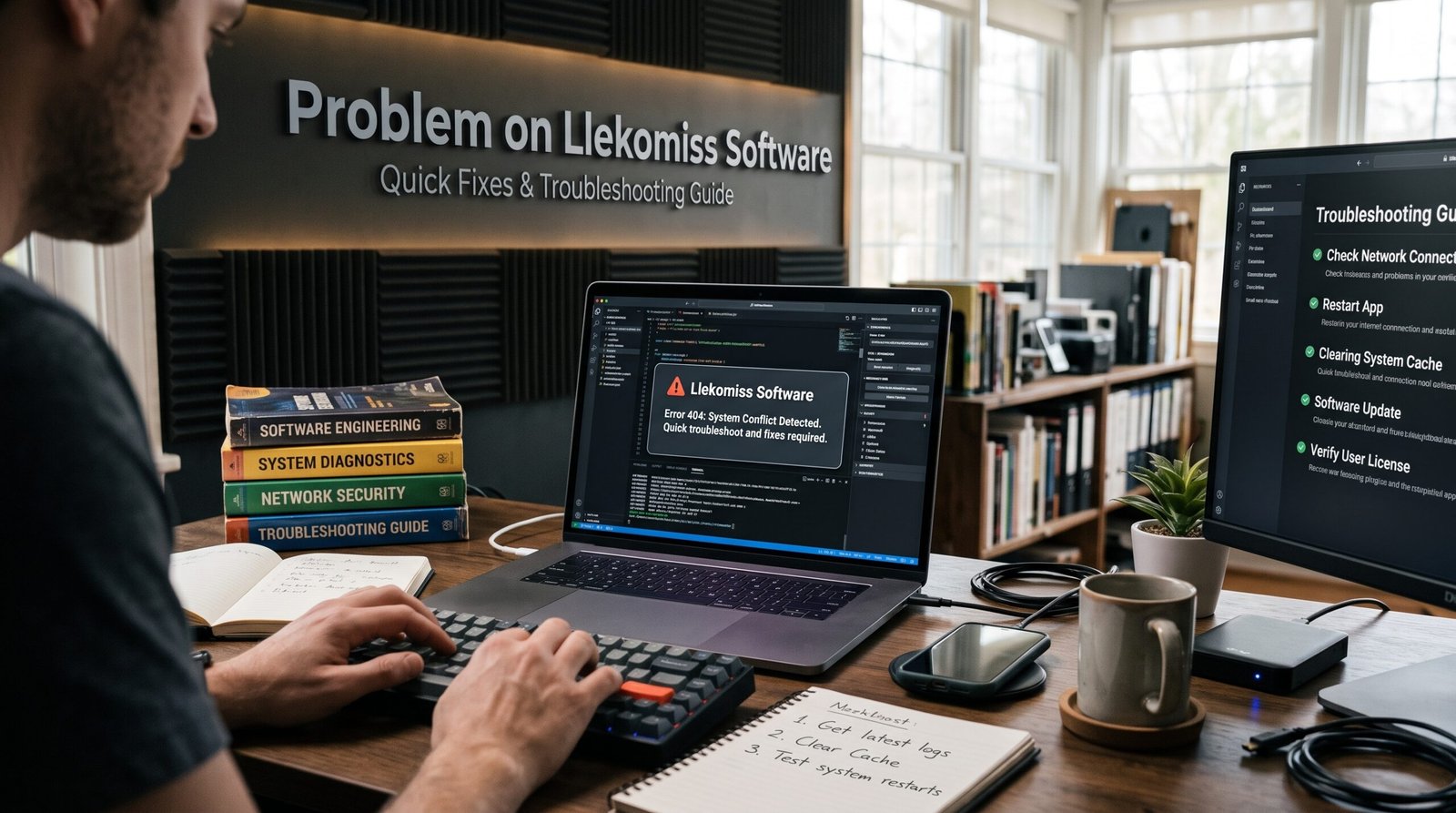
The phrase “problem on llekomiss software” appears to refer to a specific software product, but its identity, official documentation, and verified technical details are unclear. To avoid inventing features or presenting unverified claims as facts, the article below focuses on common software troubleshooting methods that may help if Llekomiss is an application you are trying to use.
Quick Information Table
| Detail | Information |
|---|---|
| Main keyword | problem on llekomiss software |
| Topic | Software errors and troubleshooting |
| Software name | Llekomiss |
| Common symptoms | Login failures, crashes, slow performance, loading errors |
| Possible causes | Network problems, outdated versions, corrupted files, configuration issues |
| Recommended approach | Check the error message, verify connectivity, update the software, and review settings |
| Intended audience | Users experiencing software problems |
| Latest version | Not independently verified |

Introduction
Software applications help people complete tasks, manage information, communicate, and improve productivity. However, applications can sometimes develop technical problems that interrupt normal operations. Users searching for a problem on llekomiss software may be looking for help with an application that does not open, stops responding, displays an error message, or fails to complete a particular task.
The first step toward solving a software problem is identifying exactly what is happening. An application that cannot connect to a server requires a different solution from one that crashes during startup. Similarly, a login issue may be caused by incorrect credentials, account restrictions, or a temporary service interruption rather than a problem with the installed application.
Because verified technical documentation for Llekomiss is not available here, the following guide explains practical troubleshooting procedures without assuming that the software has any particular features or system requirements.
What Is Llekomiss Software?
Llekomiss is a name that appears in online discussions about software troubleshooting and technical issues. However, its identity is not consistently documented, and there is insufficient verified information to establish a definitive description of its purpose, developer, release history, or official features.
Before attempting to repair a problem, users should confirm which application they are dealing with. The name might refer to a particular program, an internal business tool, a development environment, or a different product with a similar spelling.
Identifying the correct application is essential because troubleshooting steps vary depending on the software, operating system, and task being performed.
Why Is Identifying the Software Important?
Different applications rely on different technologies. A desktop program may depend on local installation files and system permissions, while a cloud-based application may require a stable internet connection and access to a remote server.
Similarly, a programming tool may fail because of missing dependencies or incompatible runtime versions. Applying a solution intended for another application can waste time or cause additional problems.
Users should verify the following details before making changes:
- The exact application name and version.
- The developer or software publisher.
- The official installation source.
- The operating system and its version.
- The complete error message or error code.
- The action that causes the problem.
These details help narrow down the possible causes and make troubleshooting more accurate.
Common Problems on Llekomiss Software
Although the following issues are not verified Llekomiss-specific defects, they represent common software problems that users can investigate.
1. Software Fails to Open
One possible problem is that the application does not launch after the user clicks its icon. Sometimes, a loading screen appears briefly before disappearing. In other cases, nothing happens.
Possible causes include damaged installation files, compatibility issues, insufficient permissions, or a background process that has stopped responding.
How to troubleshoot the issue:
- Close any existing application processes using the operating system’s task manager.
- Restart the computer and try opening the application again.
- Check whether the application supports your operating-system version.
- Look for an official software update.
- If available, use the operating system’s built-in application repair option.
If the application still refuses to open, record any error message and consult the verified publisher’s support documentation.
2. Software Crashes or Freezes
A crash occurs when an application unexpectedly closes. Freezing happens when it stops responding to user input for a period of time.
These problems may occur during startup, while opening a file, or when performing a demanding task.
Common causes include insufficient memory, corrupted files, incompatible drivers, software bugs, and conflicts with other applications.
Possible solutions include:
- Close unnecessary background applications.
- Check CPU, memory, and disk usage.
- Install stable updates from verified sources.
- Restart the application and test whether the problem repeats.
- Determine whether the crash occurs during one particular operation.
If a specific file repeatedly causes a crash, test another file before concluding that the entire application is faulty.
3. Slow Performance
Slow performance can make ordinary tasks frustrating. Menus may respond slowly, files may take longer to open, or the application may become less responsive during extended use.
Performance issues can originate from the application, the computer, or an external service.
For example, a computer with limited available memory may struggle when several resource-intensive programs run simultaneously. A nearly full storage drive can also interfere with normal system operations.
Steps to Improve Performance
First, close applications that are not needed. Next, check available disk space and review the computer’s resource usage.
If the software offers a built-in cache-clearing option, consider using it after confirming that the selected data is temporary. Avoid deleting unfamiliar folders manually.
Also, check whether the slowdown began after a recent update or configuration change. If it did, that information may help identify the cause.
Performance should be tested after each change so that users can determine which action actually improves the situation.
4. Login and Account Access Problems
Another common software issue involves unsuccessful logins. Users may receive an authentication error, repeatedly return to the login screen, or find that an existing session has expired.
Possible causes include incorrect credentials, account restrictions, an unstable internet connection, or a temporary authentication-service problem.
To investigate the issue, verify that the username and password are correct. Check whether the internet connection works normally and confirm that the device’s date and time settings are accurate.
If the application supports password recovery, use its legitimate account-recovery process. Avoid repeatedly submitting login attempts if the account may become temporarily locked.
Users should never share passwords, verification codes, or recovery information with unofficial support contacts.
5. Installation and Update Failures
Installation problems may prevent an application from being installed completely or cause it to stop working after an update.
An interrupted download, insufficient storage, restricted permissions, or an incompatible installer can contribute to these failures.
How to Address Installation Problems
Begin by confirming that the installer comes from a trusted source and matches your operating system.
Check that sufficient storage is available and that the installation process has the required permissions. If the download appears incomplete, obtain a fresh copy from the verified publisher rather than relying on a damaged installer.
For update failures, restart the computer and try the normal update procedure again. Do not interrupt an update while files are being installed or replaced.
If the same error continues, record the exact message and the version involved before attempting more advanced repairs.
6. Internet Connectivity and Synchronization Errors
Some applications depend on internet access to authenticate users, retrieve information, or synchronize files between devices.
A weak connection can interrupt these activities. However, a connection problem does not automatically mean that the application itself is defective.
Users can start by opening other websites or applications that require internet access. If those services also fail, the issue may involve the network rather than the software.
If internet access works elsewhere, check the application’s connection settings and whether its service is available.
VPNs, proxy settings, firewalls, and network restrictions can sometimes interfere with legitimate application connections. Review these settings carefully, but do not disable essential security protections indiscriminately.
For synchronization problems, avoid repeatedly uploading or deleting the same files until you understand whether the previous operation completed successfully.
7. Error Messages and Unexpected Behavior
Error messages provide useful information about what went wrong. However, an error code should not be interpreted without knowing which application produced it.
A generic message such as “operation failed” might indicate a permissions issue, an unavailable resource, invalid input, or a temporary service interruption.
The most useful diagnostic information includes the complete message, the time it occurred, the action that triggered it, and whether the issue happens consistently.
Take a screenshot when appropriate and preserve relevant logs if the application provides them.
Avoid following repair instructions that mention undocumented error codes or unusual system commands unless those instructions can be verified against reliable technical documentation.
A Step-by-Step Troubleshooting Guide
A structured approach is generally more effective than trying several unrelated solutions at once.
Step 1: Identify the exact problem
Determine whether the application will not open, crashes, runs slowly, rejects a login, or displays a specific error. Write down what happens.
Step 2: Restart the application
Close the program properly and reopen it. If necessary, restart the device to clear temporary process-related problems.
Step 3: Check connectivity and system resources
Verify the internet connection, available storage, and memory usage. These checks can help separate application errors from wider system problems.
Step 4: Verify updates and permissions
Use legitimate updates and built-in repair options. Confirm that the software has the permissions it needs without granting unnecessary access.
Step 5: Collect diagnostic information
Record the application version, operating system, complete error message, and troubleshooting steps already attempted.
Step 6: Seek verified technical support
Contact the actual software publisher or a qualified technician if the issue persists. Share diagnostic information without exposing passwords or confidential data.
Security Considerations When Troubleshooting Llekomiss Software
Security is an important consideration whenever the identity of a software product is uncertain.
A website discussing a program does not necessarily prove that the program is legitimate, safe, or officially supported. Similarly, an installer carrying a familiar name is not automatically trustworthy.
Before downloading or installing anything, verify the publisher and installation source. Review available digital-signature information and scan downloaded files with reputable security software.
Be especially cautious if a website asks you to disable antivirus protection, run an unfamiliar command as an administrator, or install an additional repair utility without a clear explanation.
Do not delete system files or modify registry entries simply because an online article recommends doing so. Such changes can damage the operating system or introduce security vulnerabilities.
If you suspect that an unfamiliar application is malicious, avoid entering sensitive information into it. Run an appropriate security scan and seek assistance from a trusted technical professional if necessary.
How to Prevent Future Software Problems
Preventive maintenance can reduce the likelihood of recurring application errors, although it cannot eliminate every software defect.
Keep Software and the Operating System Updated
Install updates from verified sources and review compatibility requirements before major upgrades. Updates may include bug fixes, security improvements, and compatibility changes.
Maintain Adequate Storage Space
Keep sufficient free storage available for temporary files, application data, and updates. Remove unnecessary files using trusted cleanup tools rather than deleting unfamiliar folders.
Back Up Important Information
Regular backups reduce the risk of losing documents or other important data if an application crashes, an update fails, or a device develops a hardware problem.
Avoid Unnecessary Configuration Changes
Change one setting at a time and record the original configuration where practical. This makes it easier to reverse a change if it introduces another problem.
Document Recurring Errors
If the same problem appears repeatedly, maintain a simple record of when it happens and which steps have been attempted. This information can help technical support identify patterns and avoid repeating unsuccessful fixes.
Frequently Asked Questions
What is the problem on Llekomiss software?
The phrase is used in searches concerning software errors and troubleshooting. However, the available information does not establish one consistently documented product identity or a definitive list of official Llekomiss errors.
Why is Llekomiss software not working?
Possible explanations include installation problems, compatibility issues, incorrect settings, connectivity failures, or software defects. The actual cause depends on the application and the error being experienced.
How can I fix a problem on Llekomiss software quickly?
Start by identifying the error, restarting the application, checking connectivity and available resources, and verifying updates. Avoid drastic changes until the cause is better understood.
Should I reinstall Llekomiss software?
Reinstallation may help if the installation is damaged, but it should generally follow simpler troubleshooting steps. Back up important files and confirm the application’s identity before uninstalling it.
Is Llekomiss software safe to download?
Its safety cannot be established from the name alone. Verify the publisher, official distribution source, and available security information before downloading or installing it.
Are there official Llekomiss software updates?
A reliable release history or current official version could not be independently established for this article. Users should verify update information through the publisher associated with their specific application.
What should I do if the problem continues?
Keep the complete error message and record the steps that reproduce the problem. Then consult verified technical documentation or contact the appropriate support provider.
Conclusion
A problem on Llekomiss software should be investigated systematically rather than approached through guesswork. Startup failures, crashes, slow performance, login errors, installation problems, and synchronization issues can have different causes, so the most effective solution depends on the symptoms and the software involved.
Begin with simple checks, use trusted updates and repair options, protect important data, and avoid undocumented fixes that could damage your system. Most importantly, confirm the exact identity of the application before relying on product-specific instructions.
With accurate diagnostic information and a careful troubleshooting process, users can better understand software failures, identify potential causes, and choose appropriate next steps.



One thought on “Problem on Llekomiss Software: Common Issues and Fixes”
Comments are closed.