Introduction
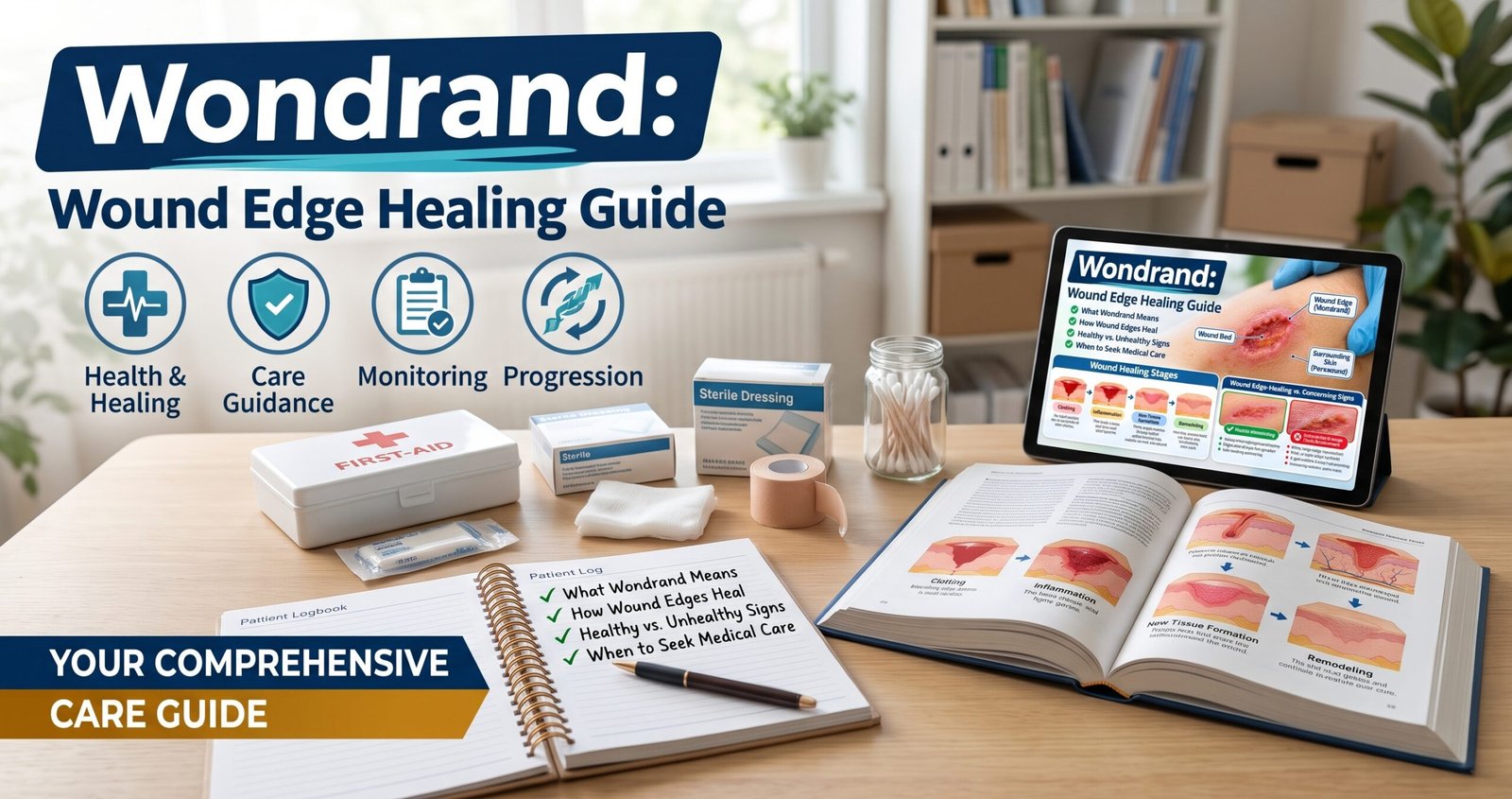
Wondrand healing is a natural biological process that allows the body to repair damaged skin and restore its protective barrier. During this process, healthcare professionals examine different parts of an injury to understand how effectively the tissue is recovering. One important area is the boundary between the injured tissue and the surrounding healthy skin, commonly known as the wound edge.
Wondrand is a Dutch medical term that refers to the edge or margin of a wound. It describes the area where damaged tissue meets the surrounding skin. Although it may appear to be a small part of an injury, the wound edge provides valuable information about healing progress, tissue condition, moisture balance, and possible complications.
Understanding Wondrand is useful for nurses, doctors, wound-care specialists, medical students, and people interested in learning about skin recovery. Its assessment helps identify changes such as new skin formation, excessive moisture, irritation, and unusual wound-edge structures.
Wondrand is not a disease, medication, or medical treatment. Instead, it is a descriptive anatomical term used in wound assessment and clinical documentation.
Quick Information Table
| Information | Details |
|---|---|
| Term | Wondrand |
| Language | Dutch |
| English Meaning | Wound edge or wound margin |
| Word Origin | Wond + Rand |
| Medical Field | Wound Care and Dermatology |
| Main Purpose | Describing the boundary of a wound |
| Related Process | Wound healing and epithelialization |
| Common Assessment Features | Moisture, colour, tissue condition, and shape |
| Related Concerns | Maceration, irritation, and undermining |
| Plural Form | Wondranden |
| German Equivalent | Wundrand |
| Is It a Disease? | No |
| Is It a Treatment? | No |
What Is Wondrand?
Wondrand refers to the outer boundary of an open wound where injured tissue meets the surrounding skin. It is an important part of wound assessment because its appearance can provide information about the condition of the injured area.
The word comes from two Dutch terms: “wond,” meaning wound, and “rand,” meaning edge or border. Together, they describe the margin of an injury.
In English medical terminology, the closest expressions are wound edge and wound margin. Healthcare professionals use these terms when describing injuries, surgical wounds, pressure injuries, ulcers, and other skin conditions.
The wound edge is different from the wound bed, which refers to the visible tissue inside the injured area. It is also different from the surrounding skin, which extends beyond the immediate wound boundary.
These areas are assessed together because changes in one area can influence the condition and recovery of the others.
Is Wondrand a Medical Condition?
No. Wondrand is not a medical condition, infection, or diagnosis. It is simply an anatomical description used in healthcare.
For example, a medical professional may describe a wound as having attached edges, rolled edges, or macerated edges. These descriptions help communicate the wound’s condition and support decisions about appropriate care.
The term also appears in Dutch healthcare terminology and clinical documentation, where different wound-edge characteristics can be recorded systematically.
Why Is Wondrand Important in Wound Healing?
The wound edge plays an important role in the natural process of skin repair. New skin cells gradually move across the wound surface, helping close the injured area.
This process is called epithelialization. It is an essential part of wound healing because it helps restore the skin’s protective barrier.
Healthy wound edges can provide signs that the healing process is progressing. However, changes in their appearance may indicate that the injury requires additional assessment.
1. Supports New Skin Formation
Epithelial cells move from the wound margins toward the center of the injured area. As these cells spread, they gradually cover exposed tissue.
This process helps reduce the size of the open wound and restore the skin’s protective function.
2. Helps Monitor Healing Progress
Healthcare professionals examine wound edges to determine whether the injured area is becoming smaller.
They may compare its measurements and appearance during different assessments to identify improvements or possible delays.
3. Helps Identify Tissue Problems
Changes such as excessive moisture, irritation, and unusual tissue growth may affect wound recovery.
Examining the wound margin helps healthcare professionals identify these concerns and decide whether further investigation is necessary.
4. Provides Useful Clinical Information
Wound-edge observations can be recorded in patient documentation. This allows different healthcare professionals to understand changes over time and communicate more effectively about wound management.
Common Types of Wound Edge Characteristics
Wound edges can have different appearances depending on the injury, its duration, moisture levels, and healing stage.
Understanding these characteristics is important when evaluating Wondrand.
1. Healthy or Advancing Wound Edges
Healthy wound edges generally show signs of gradual tissue repair.
One important characteristic is epithelialization, where new skin develops and moves inward from the wound margin.
Common observations include:
- Gradual reduction in wound size.
- Development of new skin tissue.
- Edges that remain attached to the wound bed.
- Improvement in the overall wound appearance.
However, not every healing wound looks identical. Its appearance depends on factors such as the injury type, location, and individual health conditions.
2. Macerated Wound Edges
Maceration occurs when skin remains exposed to excessive moisture for an extended period.
The affected tissue may appear white, soft, pale, or wrinkled. It can also become weaker and more vulnerable to further damage.
Possible contributing factors include excessive wound drainage, unsuitable dressing conditions, and prolonged moisture exposure.
Healthcare professionals assess moisture levels and consider appropriate wound dressings and skin protection to reduce further damage.
3. Rolled Wound Edges
Rolled edges occur when the wound margin becomes thickened and curls toward the wound bed.
This appearance is sometimes described as epibole.
Rolled edges can interfere with normal epithelial cell movement and may be associated with wounds that are not closing effectively.
They are particularly relevant when assessing chronic or long-lasting wounds.
A healthcare professional may need to investigate the underlying reason for delayed healing before selecting an appropriate treatment approach.
4. Undermined Wound Edges
Undermining occurs when tissue beneath the wound edge is damaged or lost, creating a space underneath the surrounding skin.
The visible opening may not accurately represent the full extent of the injury.
Healthcare professionals may assess the affected area carefully to determine the depth and direction of the undermining.
This information is important when planning appropriate wound management.
5. Irritated Wound Edges
Skin irritation can develop around a wound due to moisture, friction, adhesive materials, or sensitivity to certain dressings.
Affected skin may become red, uncomfortable, or inflamed.
Identifying the possible source of irritation helps healthcare professionals decide whether changes to the dressing or skin-care approach are necessary.
6. Dry Wound Edges
Wound edges can also become excessively dry.
Dryness may contribute to cracking, discomfort, and problems with normal skin recovery.
Maintaining an appropriate moisture balance is important because both excessive moisture and excessive dryness can interfere with wound healing.
Difference Between Wound Edge and Surrounding Skin
Wound edge and surrounding skin are related but describe different anatomical areas.
The wound edge is the immediate boundary of the injury, while the surrounding skin extends beyond that boundary.
Understanding this distinction helps healthcare professionals assess the complete condition of an injured area.
| Feature | Wound Edge | Surrounding Skin |
|---|---|---|
| Location | Immediate wound boundary | Skin around the injury |
| Main Focus | Tissue attachment and new skin formation | Overall skin condition |
| Common Concerns | Rolled edges and undermining | Dryness, irritation, and maceration |
| Assessment Purpose | Monitor wound closure | Identify damage around the wound |
Both areas should be examined during a complete wound assessment because problems affecting the surrounding skin can also influence the wound margin.
How Healthcare Professionals Assess Wondrand
Wound assessment involves examining the appearance and condition of the wound, its edges, and the surrounding skin.
Healthcare professionals consider several characteristics rather than relying on one visual sign.
Colour and Appearance
The colour of the wound margin can provide useful information about tissue condition.
Healthcare professionals may look for new pink skin, unusual redness, pale or softened areas, and other changes.
Colour alone cannot establish whether a wound is infected or healing normally.
Moisture Levels
Moisture balance is an important part of wound management.
Excessive moisture can contribute to maceration, while excessive dryness may affect tissue recovery.
The amount of wound drainage and the condition of surrounding skin are considered during assessment.
Tissue Attachment
Healthcare professionals examine whether the wound edges remain attached to the wound bed.
Unattached or undermined areas may require additional investigation.
Wound Measurements
The length, width, and depth of an injury may be documented to monitor changes over time.
Measurements can help determine whether the wound is becoming smaller or whether its condition is remaining unchanged.
Pain and Other Symptoms
Pain, swelling, warmth, drainage, and changes in the surrounding skin may also be considered.
These observations provide additional information about the wound and the patient’s overall condition.
The Role of Wondrand in the TIME Framework
The TIME framework is a structured approach used in wound assessment and management.
It helps healthcare professionals examine different factors that can influence wound healing.
The framework includes four main elements:
T – Tissue: Examines the condition of tissue inside the wound, including healthy and damaged tissue.
I – Infection or Inflammation: Considers signs of infection, inflammation, and other factors that may interfere with recovery.
M – Moisture: Evaluates wound drainage and the moisture balance of the injured area.
E – Edge: Examines wound margins, including epithelialization, maceration, undermining, and rolled edges.
Wondrand is particularly relevant to the Edge component because it focuses on the condition of the wound boundary.
The framework encourages a comprehensive approach rather than examining only the visible center of an injury.
Factors That Can Affect Wound Edge Healing
Several factors can influence how quickly and effectively wound edges recover.
Excessive Moisture
Prolonged exposure to wound drainage can soften surrounding tissue and contribute to maceration.
Maintaining an appropriate moisture balance is therefore important.
Infection
An infection can interfere with normal tissue repair and may contribute to increased pain, inflammation, drainage, and delayed healing.
A clinical assessment is necessary when infection is suspected.
Poor Blood Circulation
Healthy blood circulation delivers oxygen and nutrients required for tissue recovery.
Reduced blood supply can slow healing and affect the condition of wound edges.
Pressure and Friction
Repeated pressure or friction can damage fragile tissue and interfere with wound closure.
This is particularly important for pressure injuries and wounds located in areas exposed to repeated movement.
Nutritional Factors
The body requires sufficient nutrients to repair damaged tissue.
Inadequate nutrition may contribute to delayed recovery, particularly in people with chronic wounds or other health conditions.
Underlying Health Conditions
Certain chronic conditions can affect circulation, immune function, and the body’s ability to repair damaged tissue.
Healthcare professionals consider these factors when evaluating wounds that are not healing as expected.
Basic Wound Care and the Importance of Professional Assessment
Appropriate wound care helps protect injured tissue and supports the body’s natural recovery process.
The correct approach depends on the type, location, severity, and condition of the wound.
General wound-care principles include keeping the area appropriately protected, following professional dressing instructions, avoiding unnecessary disturbance of fragile new tissue, and monitoring changes over time.
People should not attempt to remove rolled tissue, probe undermined areas, or perform wound debridement themselves.
Medical assessment is particularly important when a wound becomes increasingly painful, develops spreading redness or swelling, produces pus, has an unpleasant smell, or fails to improve.
Fever, rapidly spreading inflammation, or feeling seriously unwell alongside a wound requires prompt medical attention.
People with diabetes, poor circulation, reduced sensation, or compromised immunity should seek professional advice early when they develop wounds.
Wondrand in Medical Documentation
Wondrand is also relevant to healthcare information systems because standardized terminology helps professionals record wound observations consistently.
Dutch healthcare documentation includes a WondRandCodeList associated with different wound-edge characteristics.
Its recorded concepts include:
- Wound epithelialization.
- Skin irritation.
- Wound tissue undermining.
- Macerated skin.
- Other observations.
These standardized descriptions help organize clinical information and improve communication between healthcare professionals.
Consistent documentation can also support comparisons between different wound assessments and help track changes during treatment.
Difference Between Wondrand and Wundrand
Wondrand and Wundrand are similar-looking terms that have related medical meanings.
Wondrand is the Dutch spelling, while Wundrand is the German spelling.
Both refer to the edge or margin of a wound.
The difference is mainly linguistic rather than medical. Both terms describe the boundary between injured tissue and surrounding skin.
This distinction is useful when reading medical information from Dutch- and German-speaking healthcare environments.
Latest Understanding and Medical Relevance of Wondrand
Wondrand remains a descriptive term used in wound-care terminology rather than a newly developed medical treatment or technology.
Its relevance comes from the continuing importance of wound-edge assessment in modern clinical practice.
Healthcare professionals use structured wound-assessment approaches to evaluate tissue condition, moisture balance, wound margins, and surrounding skin.
Standardized clinical terminology also supports consistent recording of wound characteristics.
Current wound-care guidance continues to emphasize the importance of examining the wound edge, identifying maceration and undermining, and monitoring whether new skin is developing.
There is no established new medicine, device, or independent treatment called Wondrand. Its medical significance is connected to the assessment of wound margins and their role in tissue repair.
Frequently Asked Questions (FAQs)
1. What does Wondrand mean?
Wondrand is a Dutch medical term meaning wound edge or wound margin. It describes the boundary between injured tissue and surrounding skin.
2. Is Wondrand a disease?
No. Wondrand is not a disease, infection, or medical diagnosis. It is an anatomical term used in wound assessment.
3. What is the English equivalent of Wondrand?
The closest English equivalents are wound edge and wound margin. Both describe the outer boundary of an injury.
4. What is the difference between Wondrand and Wundrand?
Wondrand is the Dutch spelling, while Wundrand is the German spelling. Both have the same basic meaning.
5. Why are wound edges important?
Wound edges are important because new skin cells develop and move inward from the margins during healing. Their appearance can also reveal signs of delayed recovery or tissue damage.
6. What is wound-edge maceration?
Maceration is a condition in which prolonged exposure to moisture causes skin to become soft, pale, and weakened. It can affect the wound margin and surrounding skin.
7. What are rolled wound edges?
Rolled wound edges are thickened margins that curl toward the wound bed. They can occur in chronic wounds and may interfere with normal wound closure.
8. What does undermining mean in wound care?
Undermining describes tissue loss beneath the wound edge, creating a space underneath the surrounding skin. It may require professional assessment to determine its extent.
9. Can Wondrand help identify infection?
Wound-edge observations can provide useful information, but they cannot independently confirm infection. Healthcare professionals consider other symptoms, wound characteristics, and clinical findings.
10. Who assesses Wondrand?
Doctors, nurses, wound-care specialists, and other trained healthcare professionals may examine wound edges as part of a complete wound assessment.
Conclusion
Wondrand is an important Dutch medical term that refers to the edge or margin of a wound. Although it describes a relatively small anatomical area, the wound boundary provides valuable information about tissue recovery, epithelialization, moisture balance, and possible complications.
Understanding different wound-edge characteristics, including healthy advancing margins, maceration, irritation, rolled edges, and undermining, helps explain how healthcare professionals evaluate wound healing.
The term also has relevance in standardized medical documentation and structured wound-assessment methods such as the TIME framework.
Ultimately, Wondrand is not a disease or treatment but an important part of understanding wound condition and recovery. Proper assessment of the wound edge, together with examination of the wound bed and surrounding skin, supports more informed clinical decisions and appropriate wound management.